Drinking Above the Traffic: A Field Guide to Bangkok's Rooftop Bars
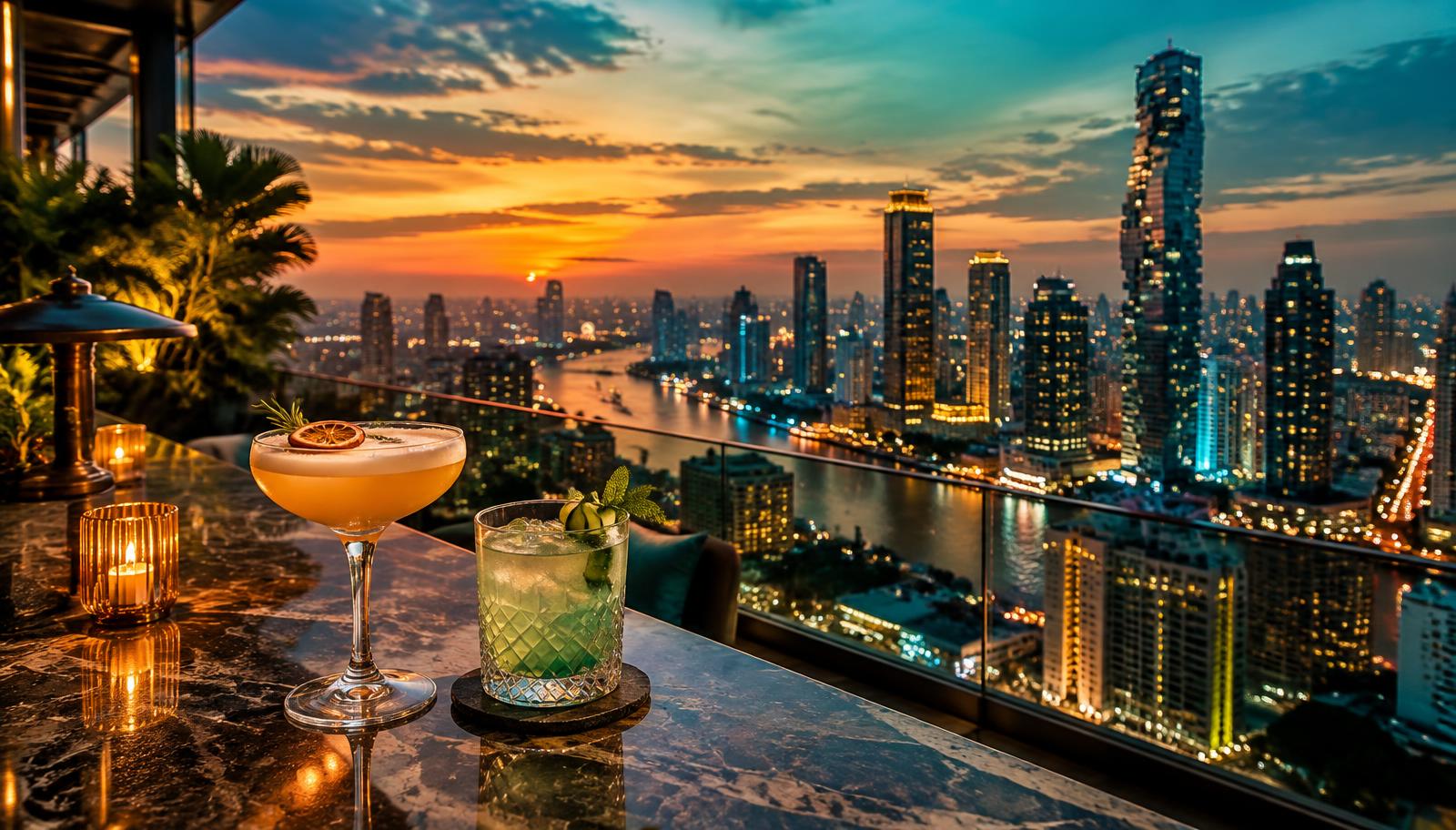
Every great city has a signature way to drink, and Bangkok's is vertical. Nowhere else on earth has a visitor economy so thoroughly organised around the idea that a cocktail tastes better sixty floors up, with a warm wind in your face and the whole city laid out below like a circuit board. The rooftop bar is not a subgenre here. It is a category, an industry, and for a certain kind of traveller the entire reason for the trip.
But the phrase "rooftop bar in Bangkok" now covers an enormous range — from a famous ledge where security manages the queue like an airport, to a ninth-floor terrace above a shophouse where the skyline is modest and the beer is cheap. Treating them as one thing is how people end up paying hotel-lounge prices for a view they could have had for the price of a singha. This is a field guide to reading the altitude.
How Bangkok became the rooftop city
The short answer is weather, wealth and views. A warm evening climate makes outdoor drinking viable eleven months of the year. A building boom through the 1990s and 2000s stacked hotels and condominiums high above Sukhumvit and Silom. And a city that is chaotic and crowded at street level turns strangely beautiful from above — the traffic becomes a slow river of light, the tangle of wires disappears, the temples and towers arrange themselves into a skyline. What started as a few hotel bars in the 1990s is now a proper ladder of rooms, and new ones open every season because the economics are unarguable: a rooftop with a view can charge three times the price of the same drink at ground level and fill every night.
The three tiers of altitude
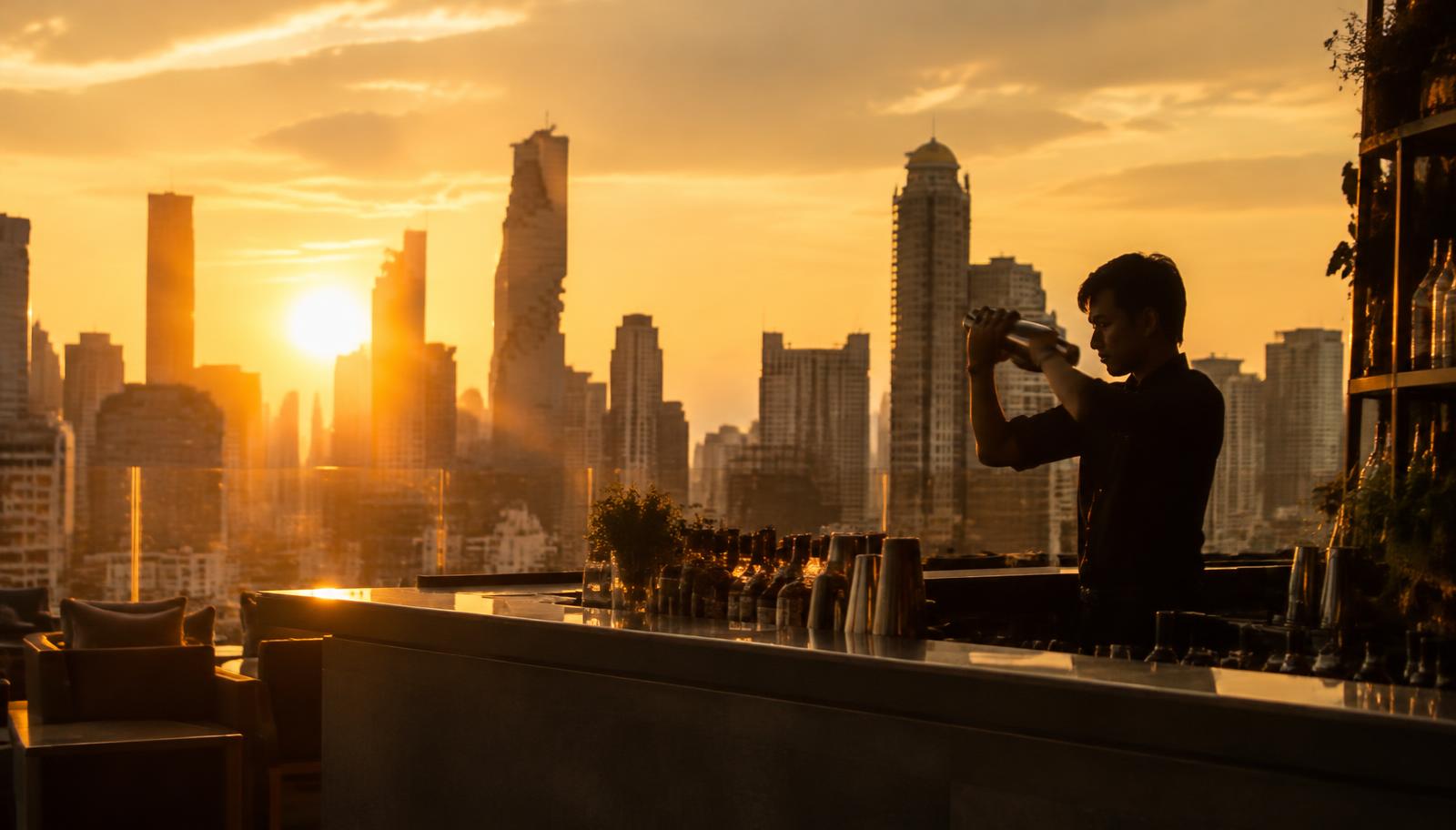
It helps to think of the scene in three tiers. At the top sit the destination rooftops — the rooms with names that appear on bucket lists. These are 55 to 65 floors up, attached to landmark hotels or towers, and they operate like attractions: reservation policies, dress codes, minimum spends at the best tables, and queues at sunset. The drinks are genuinely good and genuinely expensive — expect cocktail prices that would not look out of place in London. You go for the event of it, and the honest advice is to go once, dress properly, arrive before the sun drops, and order the signature rather than the beer.
The middle tier is where Bangkok is quietly strongest: the serious cocktail rooftops without the landmark surcharge. Rooms in the 25-to-45-floor band, often above boutique hotels or office towers, where the bartenders take the drinks as seriously as the view and the bill comes to perhaps half of the top tier. This is the altitude where locals actually drink, where a Tuesday night table is still available, and where the city's cocktail revolution climbed the lift shaft.
Then there is the ground-level rooftop — the sky terrace. Anything from the eighth to the twentieth floor, casual, no dress code, sometimes no reservation at all. The view is a neighbourhood rather than a panorama: rooftops, water tanks, a temple spire, the BTS sliding past at eye level. These are the rooms for a long, cheap, unplanned evening, and several of the best nights in Bangkok happen at exactly this height.
What the view actually costs
The pricing logic is simple once you see it. You are rarely paying for the drink — the same gin and tonic exists at street level for a third of the price. You are paying a rent on altitude, measured in floors and in fame. A famous ledge charges a fame premium on top of the height premium, which is why two rooftops fifty metres apart can differ by a factor of two on the same cocktail. The counter-move is equally simple: go at happy hour, which on most rooftops runs until seven or eight, and you get the same view at street-bar prices. Or accept a slightly lower floor, where the panorama is ninety percent as good and the bill is half.
Timing, weather and the dress code trap
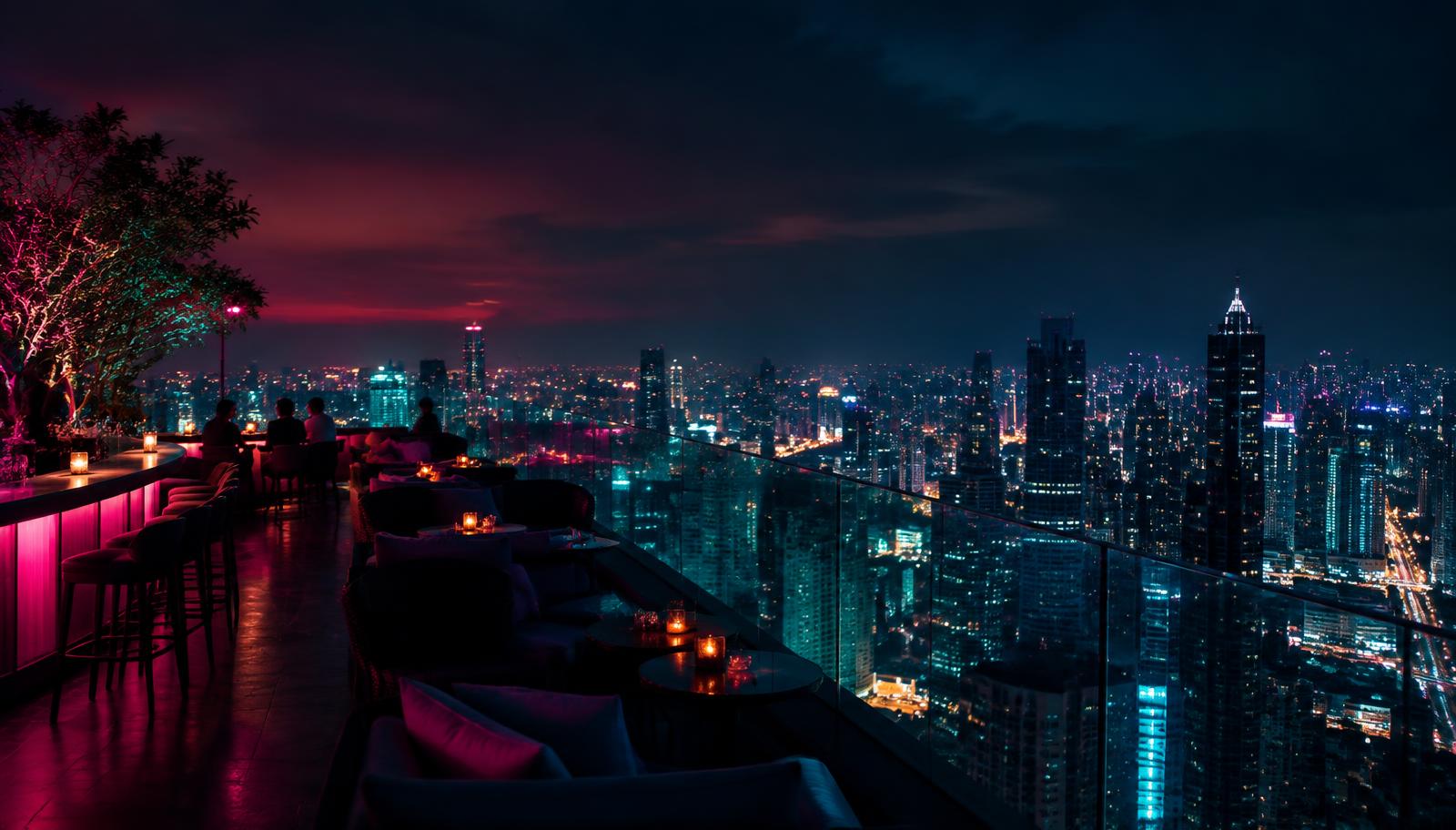
Three practical notes. First, timing: the golden window is the hour around sunset, when the sky performs and the heat breaks. Every rooftop in the city knows this, which is why that hour is the most crowded and the most photographed. Arrive forty-five minutes before sunset or come after nine, when the queue clears and the city turns to pure neon. Second, weather: from roughly May to October the rainy season can shut an open terrace with ten minutes' notice. The good rooms have a covered plan B; the great ones text you. Check before you cross town. Third, dress codes: the top tier enforces them without apology — no flip-flops, no sleeveless shirts on men, no beachwear. The middle tier mostly asks for smart-casual. The sky terraces ask for nothing at all. Nothing ends an evening faster than being turned away at the lift in sandals, so match the shoes to the altitude.
Picking your altitude
The right rooftop depends entirely on the night. Celebrating something, or showing the city to someone who has never seen it — pay for the landmark view once. A date, a serious conversation, a properly made drink — the middle tier, where the music is lower and the bartenders have time. A long easy evening with friends where nobody checks the bill — stay low and stay late. The full list of rooftop bars across Bangkok is on the bars page, filterable by neighbourhood, with the altitude and the vibe noted for each. Pick the floor to fit the evening, arrive before the sun does its trick, and let the traffic do its slow glowing thing far below. It never gets old.