Bangkok's Cocktail Revolution: How the City Became Asia's Drink Lab
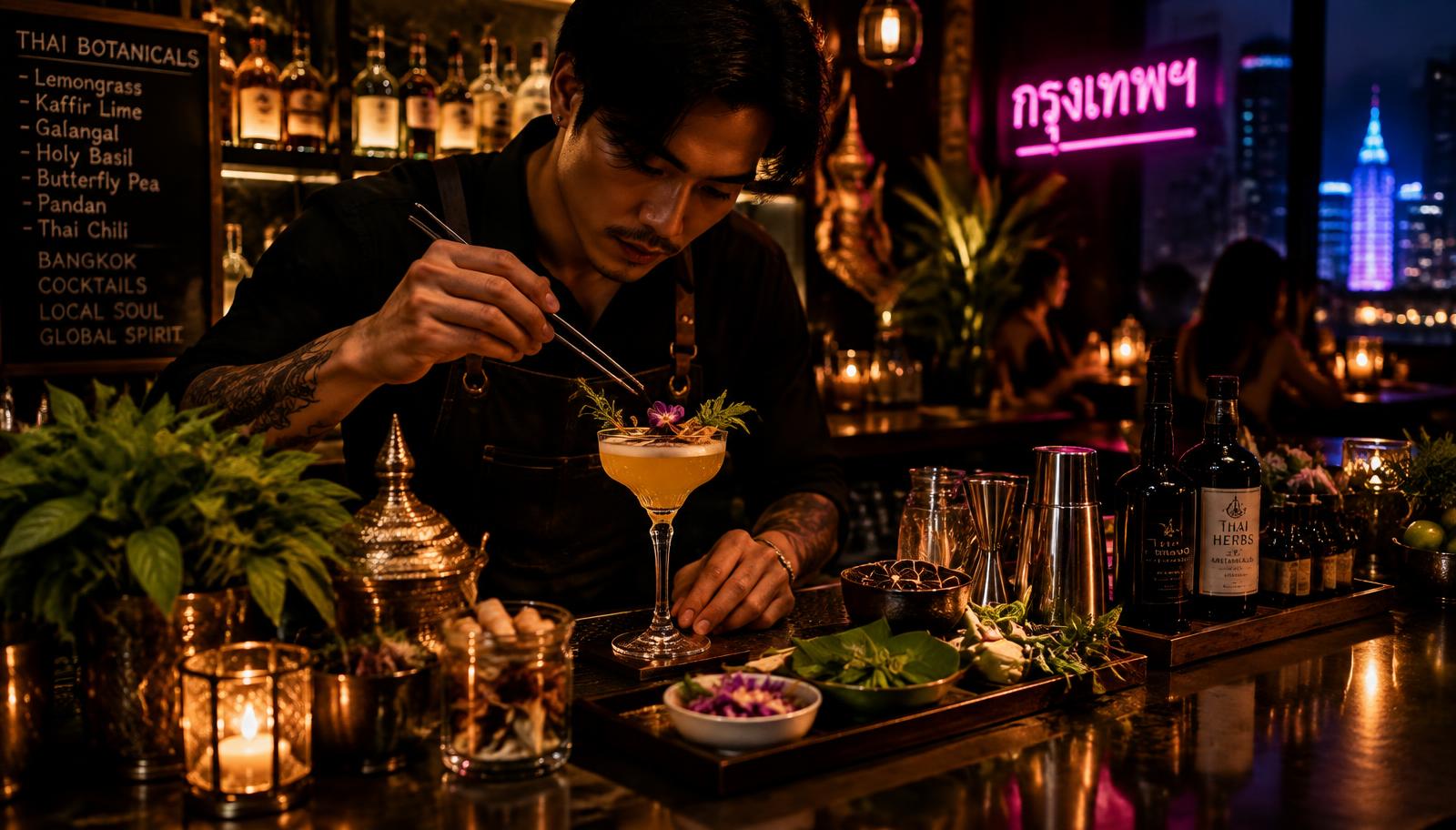
For a long time the world looked at Bangkok and saw two things behind the bar: cheap beer and cheap whiskey, the kind served with ice and soda and a plate of peanuts on a soi at midnight. Both are still here, and both are still good. But over the last decade, and with real force in the last three years, something else has happened in the rooms above and behind those sois. Bangkok has quietly become one of the most serious cocktail cities on the planet — a place where a drink is treated as craft, where local ingredients sit beside imported spirits, and where the bar counter is a laboratory as much as it is a place to get drunk.
This was not inevitable. Tokyo built its cocktail culture on a century of bar discipline. Singapore bought its way onto the map with money and ambition. Bangkok did it the hard way: with a handful of obsessive bartenders, a city that stayed cheap enough to experiment in, and a pantry of flavors nobody else in the world could claim.
The list that changed everything
The turning point, as much as anything can be a turning point in a scene that grew organically, was the Asia's 50 Best Bars list. Once a year the industry's voters rank the continent's top rooms, and for a long time that list belonged to Singapore, Hong Kong and Tokyo. Then Bangkok started appearing. Then it started climbing. Rooms that had been open for less than a year were landing in the top twenty — an almost unheard-of speed of recognition — and older institutions that had quietly been doing the work for a decade finally got the credit.
The list matters because it brings people. It brings the traveling drinker who flies to a city specifically to visit its bars the way a pilgrim visits churches. It brings the international press. It brings investment, and the confidence to open the kind of room that costs a million baht to build and needs six months to break even. But more than any of that, it told Bangkok's own bartenders that what they were doing was world-class — and that they did not have to copy New York or London to prove it.
The pantry nobody else has
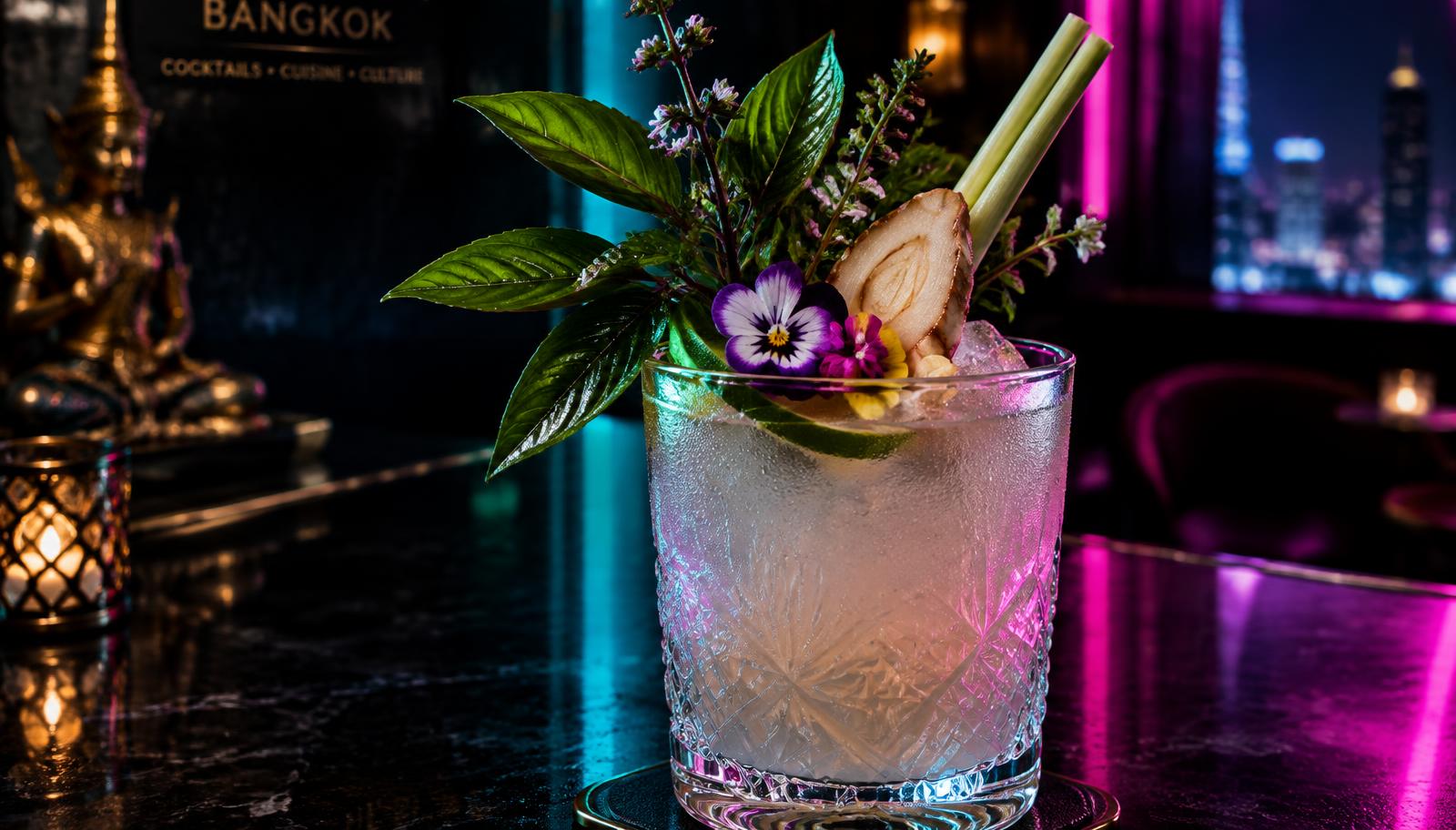
Walk into a top Bangkok cocktail bar today and read the menu, and you will notice something the menus in Manhattan do not have: a vocabulary of flavors that belongs to this country and almost nowhere else. Lemongrass, galangal, kaffir lime, Thai basil, pandan, tamarind, bird's-eye chili, coconut cream, jasmine, roselle. These are not garnishes or novelties. They are the structural ingredients of the drinks — the sour, the bitter, the aromatic spine — used with the same precision a Tokyo bartender brings to a single block of ice.
This is the real revolution, and it is the one nobody can copy. A bar in London can buy lemongrass, but it cannot buy the relationship between the bartender and the morning market in Bangkok, the one where the herbs arrive cut that day and the chili is the specific chili the drink was built around. The best Bangkok menus are not "Asian twists on classics." They are original drinks, conceived in this city, that simply could not have been conceived anywhere else. A Negroni made with a locally distilled Thai gin and a bitter built from dried roselle. A sour lifted with pandan syrup and a jasmine-tea distillate. A highball that tastes, unmistakably, like a Thai kitchen at the moment the curry paste hits the pan.
Behind it sits a quiet infrastructure that did not exist ten years ago: local gin distilleries, a handful of rum makers, small-batch bitters producers, and a generation of bartenders who learned to ferment, infuse and distill their own ingredients in-house because the imported versions were either unavailable or wrong for what they wanted to make. The Bangkok bar is, increasingly, a maker as much as a pourer.
The speakeasy as laboratory
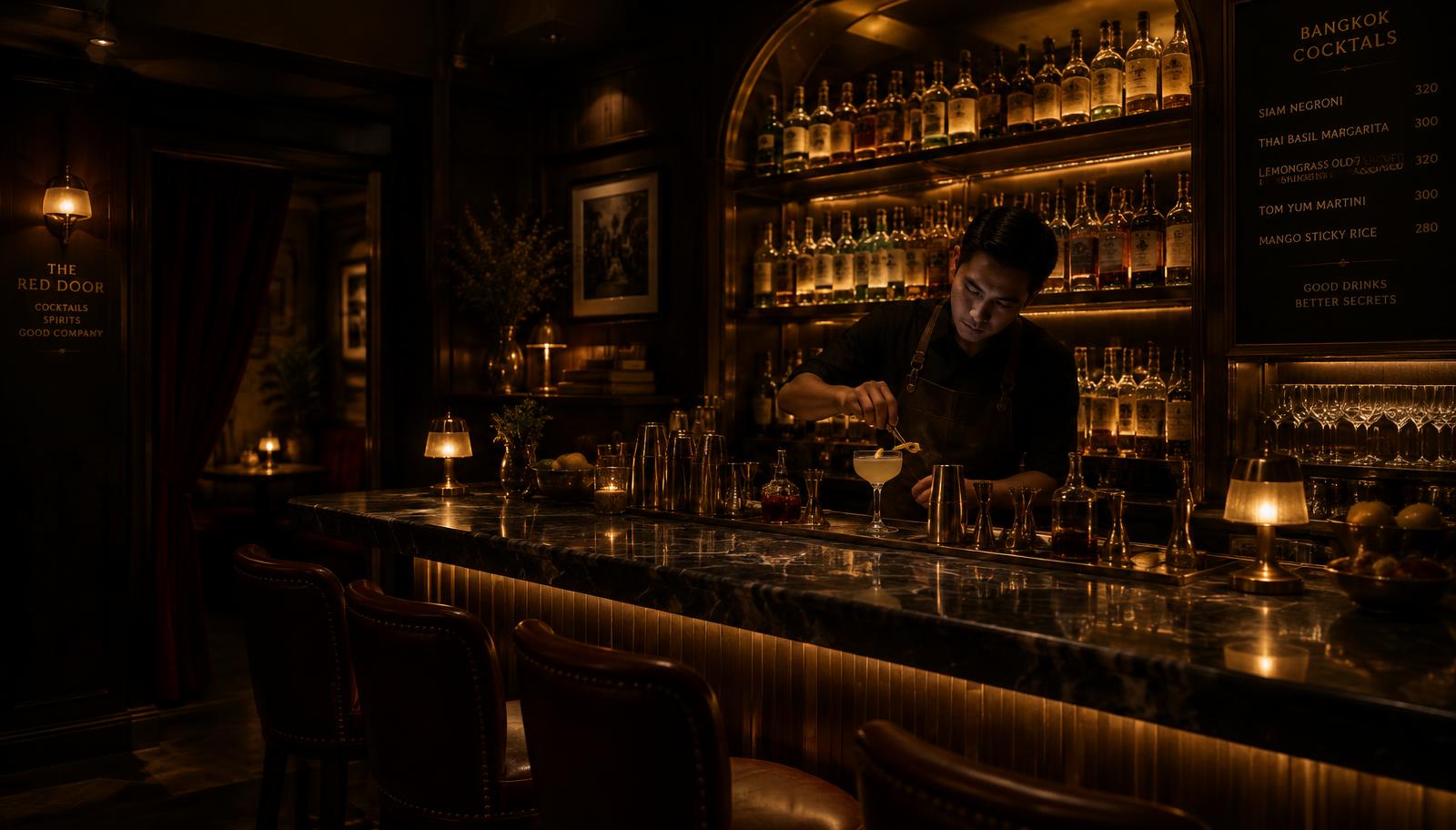
If the rooftops are Bangkok's skyline showrooms, the speakeasies are its laboratories. Tucked down sois, behind unmarked doors, above noodle shops and laundries, these are the rooms where the real craft work happens. They are small, often fewer than thirty seats, and they survive on a single proposition: that the person behind the bar is very good at what they do, and you are there to watch them do it.
The format forces a different kind of drinking. There is no sports screen, no dance floor, no bucket of ice and mixer. There is a counter, a bartender, and a conversation that runs the length of the night. Many of these rooms operate without a fixed menu, or with a menu that is more a suggestion than a rule — you tell the bartender what you are in the mood for, what you have already drunk, what you cannot stand, and a drink is built for you that exists once, tonight, for you. It is the closest thing in the city to the old Japanese counter tradition, but rebuilt around Thai flavors and Bangkok prices.
The hidden door is not a gimmick here; it is a filter. The rooms that survive on craft cannot survive a Friday-night stampede, so they hide, take reservations, limit the crowd, and protect the experience. It also means the people inside actually want to be there — which is, quietly, the thing that makes a cocktail city a cocktail city.
The generation behind the counter
The deepest change is the people. Ten years ago a serious career in Bangkok bartending meant leaving for Singapore or Australia. Today the path runs the other way: Thai bartenders who trained abroad are coming home, and the ones who never left are being trained in rooms that rival anything abroad. The best of them are no longer bartenders who happen to be Thai; they are bartenders whose Thai-ness is the point — who travel to the global competitions and bring back a worldview, then pour it through a local lens.
You can see it in the staff at any top room: the fluency with technique, the pride in the menu's local sourcing, the ease of switching between English and Thai between drinks. And you can see it in the rooms themselves, which are increasingly owned by the people who work them, not bankrolled by outsiders. That ownership is what turns a scene into a culture — it means the people making the drinks also have a stake in the city that drinks them.
Why it matters beyond the bar
It is tempting to treat the cocktail revolution as a niche concern, a story for the people who care about ice clarity and rare bitters. But it ripples outward. The bars have created demand for local distilleries, for herb farms, for glassblowers and ice suppliers, for a whole supply chain that did not exist a decade ago. They have given young Bangkok a reason to stay in the city on a Tuesday night and spend three hundred baht on a drink they will remember, instead of a thousand on a night they will not.
And they have changed how the city sees itself. Bangkok has always been a great drinking city — loud, cheap, open late, generous to strangers. What the last few years added is the idea that it can also be a precise one. That a cocktail here can be as considered as a cocktail in Tokyo, as creative as one in Mexico City, and still taste like nothing on earth except Bangkok. The revolution is not finished. But the labs are open, the pantries are full, and the counters are full every night of people who came to find out what the city can make when it decides to take a drink seriously.