Inside Bangkok's Bar Scene in 2026
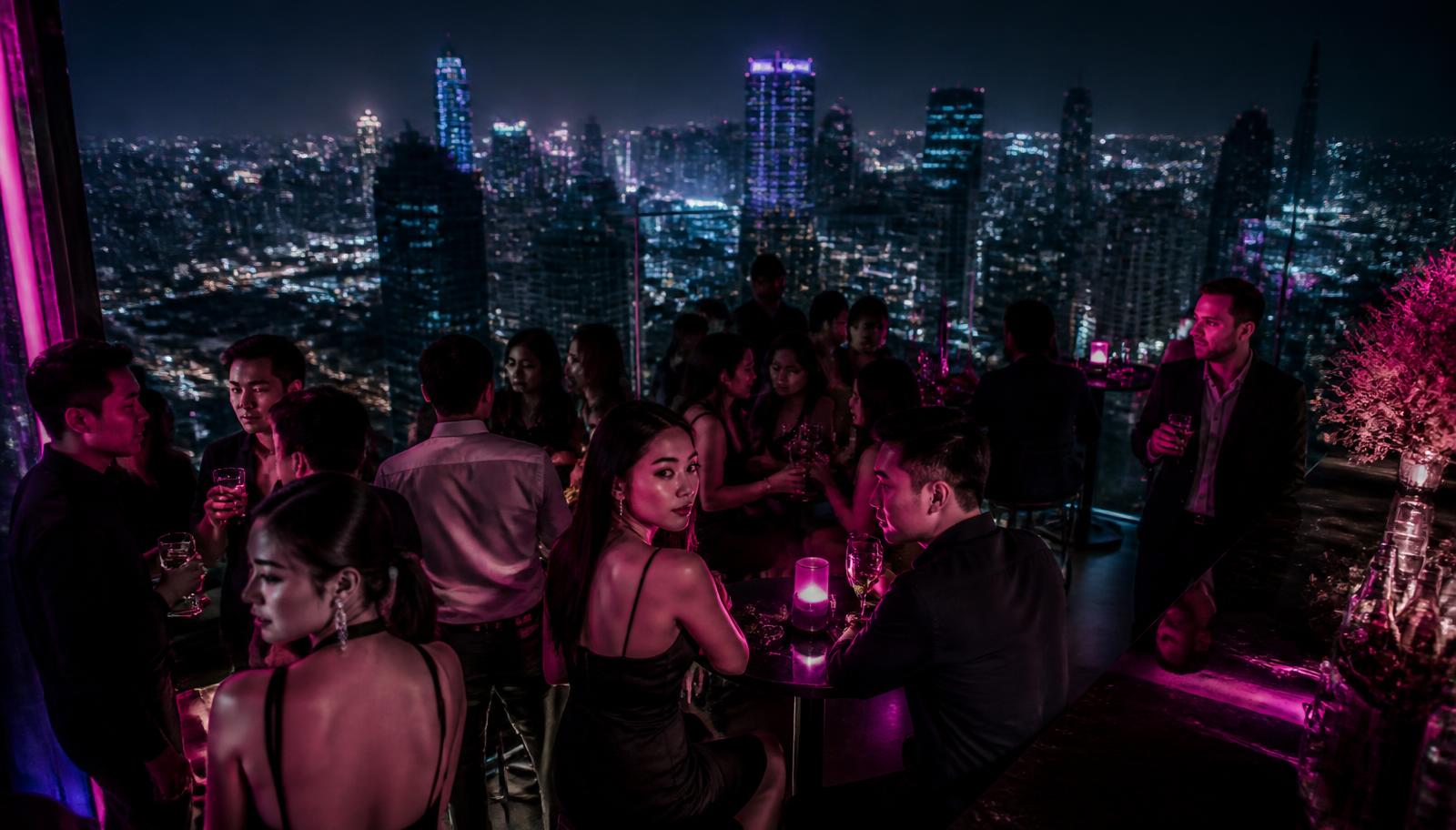
There is a moment, somewhere around eleven at night, when Bangkok stops pretending to be a working city. The office towers along Sathorn empty out, the last of the heat lifts off the pavement, and a second city switches on above and below the first — one made of rooftops, basements, shophouse doorways and plastic stools. In 2026, that second city is arguably the most complete drinking scene in Asia, and it is no longer a secret anyone is keeping.
Bangkok's reputation used to rest on volume. Cheap beer, late licences, a tolerance for chaos that other capitals lost decades ago. That version still exists, and it is glorious, but it is now only one layer of something much deeper. Over the past few years the city has assembled the full stack: world-ranked cocktail bars, hotel lounges with genuine pedigree, neighbourhood dives with soul, a serious craft beer culture, and a rooftop economy so large it has its own hierarchy.
The rooftop arms race
No city has monetised altitude the way Bangkok has. What started with Sky Bar at Lebua and Vertigo at the Banyan Tree — two bars that taught the world Bangkok could be looked down on from 60 floors up — has metastasised into dozens of venues, each one trying to out-engineer the last. Mahanakhon SkyBar put a glass floor on the country's most recognisable building. Tichuca grew a glowing jellyfish canopy over Thong Lo and made rooftops feel young again. Octave stacked three levels of terrace around a 360-degree bar. Yao and Attitude turned the Chao Phraya into a lighting feature.
The interesting shift is that the rooftops have stopped competing purely on height. The new generation competes on programming: resident DJs instead of covers bands, actual cocktail menus instead of sugary tourist slushies, and dress codes relaxed enough that locals show up. A decade ago a rooftop was somewhere you took a visiting relative once. Now, on a Thursday, the crowd at Spectrum or ABar is more Bangkok than it is anything else — young Thai professionals, expats from the Asoke offices, and a scattering of travellers who did their research.
A word of practical advice that no rooftop will give you: go early. Sunset lands between 6.30 and 7pm year-round, and the twenty minutes on either side of it are what you paid the cover charge for. Arrive at nine and you are drinking in the dark with everyone else.
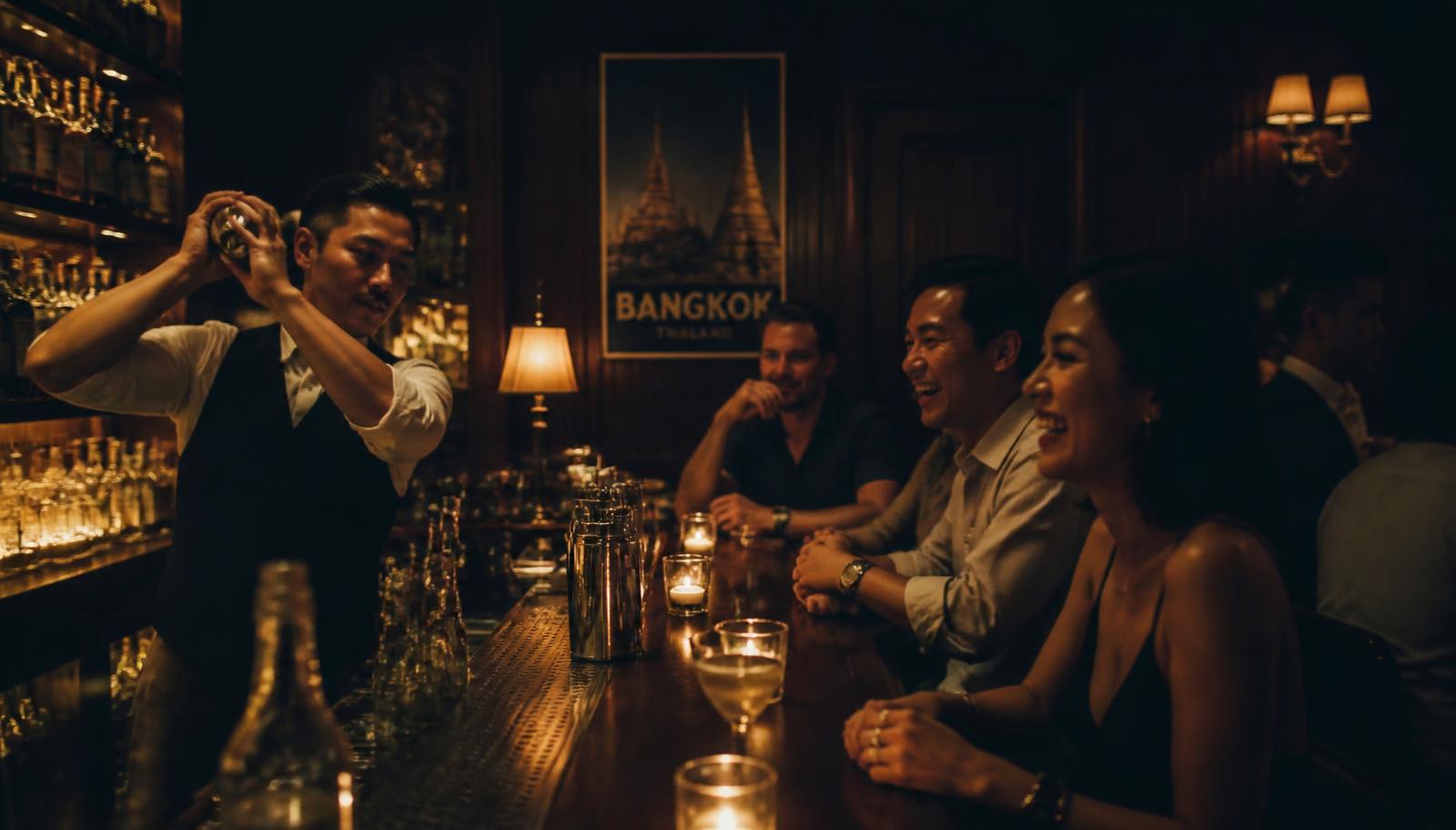
Downstairs: the speakeasy boom that refused to end
Everywhere else in the world the hidden-bar trend peaked and receded. Bangkok kept going, largely because the city's architecture is genuinely built for it. Old shophouses, unmarked second floors, alley entrances behind laundries and barber shops — you do not have to invent secrecy here, you just have to lease it.
The results are the bars that put Bangkok on the world's fifty-best lists year after year. Rabbit Hole's four floors of exposed brick on Thong Lo. Vesper's Italian-influenced precision on Convent Road. J. Boroski, where there is no menu at all and the bartender interviews you before deciding what you drink. Havana Social behind a working phone booth. Maggie Choo's, still the most theatrical room in the city, all 1930s Shanghai basement and red silk.
What separates the good ones from the merely themed is ingredients. The best Bangkok bartenders stopped importing their identity years ago and started building drinks around what is actually here: pandan, makrut lime leaf, tamarind, roasted rice, Thai chilli, local rum from Chalong Bay, mangosteen when the season is right. A well-made Thai basil and mezcal number at Teens of Thailand costs a third of what its London equivalent would, and frequently tastes better because the herbs were at a market that morning.
Chinatown, and the return of the street
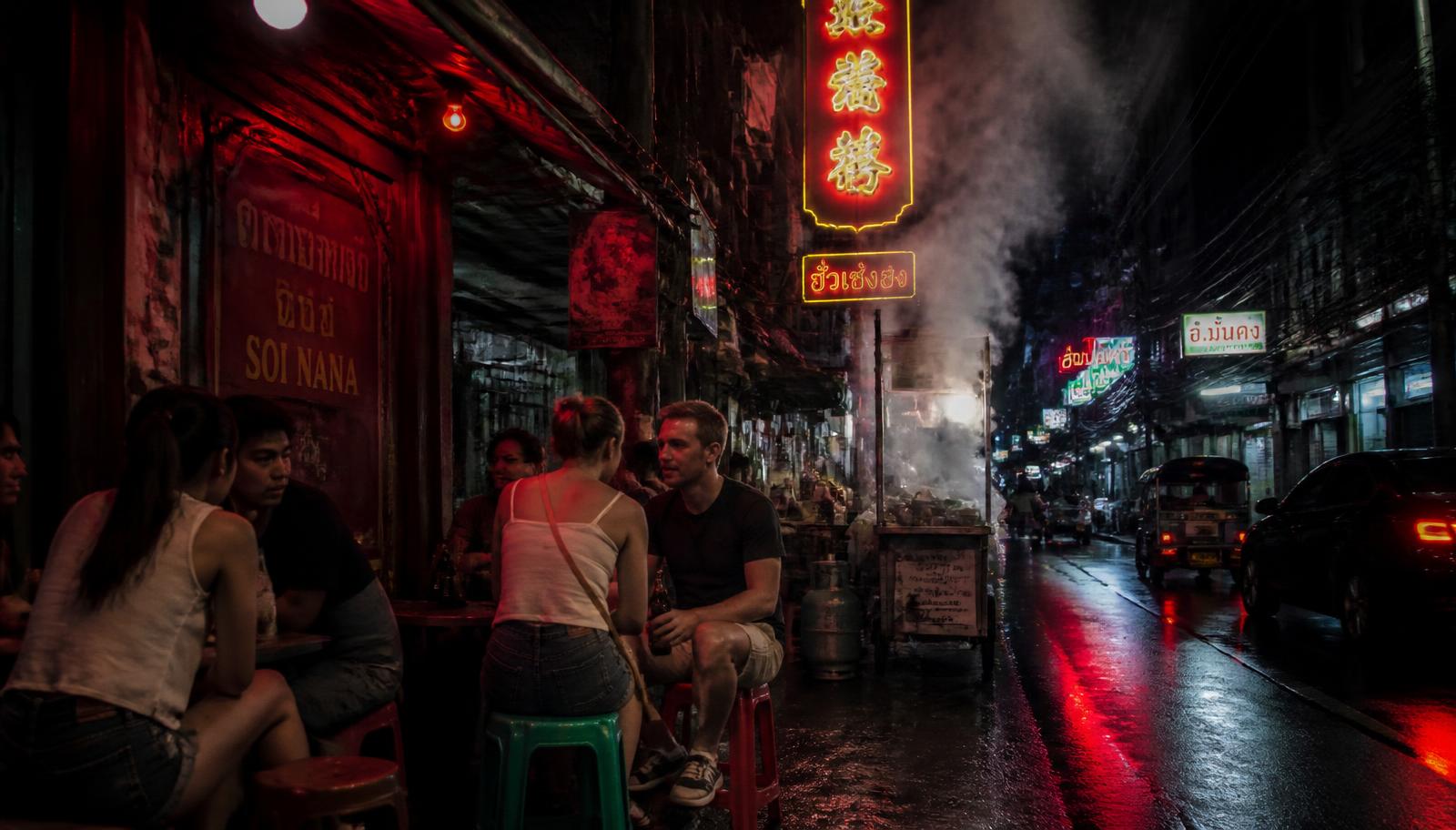
The most consequential change of the last few years has nothing to do with hotels. Yaowarat — Chinatown — turned Soi Nana (not the Sukhumvit one) into the city's most convincing bar street. Teens of Thailand opened in an old teak shophouse and proved that a serious gin bar could work in a neighbourhood tourists only visited for noodles. Ba Hao followed with red neon and Chinese-inflected cocktails. El Chiringuito brought a courtyard. Within a few hundred metres you can now drink at a proper cocktail bar, a natural wine spot and a plastic stool on the pavement, all in one night, all for less than a single round at a rooftop.
That street-level energy has spread. Talat Noi's warehouse bars, Ari's low-key neighbourhood spots north of the centre, the beer places tucked into Ekkamai's side sois — all of them are betting that people would rather sit outside at street level than pay for a view. On the evidence of any given Saturday, they are right.
Neighbourhood by neighbourhood
Bangkok is not a city you bar-hop across. Traffic makes a three-kilometre journey a forty-minute negotiation, so the smart move is to pick a district and stay in it. Sukhumvit, particularly Soi 11, remains the most concentrated strip in the country: rooftops, sports bars, Irish pubs, cocktail rooms and clubs, all within a walk. Thong Lo and Ekkamai are where Bangkok's own creative class drinks — more design, more music, fewer tourists. Sathorn and Silom split the difference between after-work hotel bars and the late chaos of Patpong and Soi 4. Riverside is the slow option, and the Bamboo Bar at the Mandarin Oriental is still the single most elegant room in Thailand. Chinatown is the one to walk.
Practicalities, honestly
Licensing hours in Bangkok are officially conservative and unofficially flexible; most bars state 1am or 2am, and entertainment-zone venues in Sukhumvit, Silom and Ratchadaphisek run later. Cocktails at a top bar sit around 400–500 baht, rooftop signatures higher, a large local beer at a street bar under 150. Almost everywhere takes cards and PromptPay now. Dress codes are real at hotel rooftops — closed shoes and long trousers — and largely fictional everywhere else. Book Rabbit Hole and Vesper on weekends; do not bother booking anything in Chinatown.
The best thing about drinking in Bangkok in 2026 is that the extremes are no longer in competition. The bartender who wins an award in March is at a plastic table in Yaowarat by June, drinking beer over ice like everyone else. That is the whole scene in one image, and it is why the city keeps beating places with far more money.